Navigating New Global and EU Packaging Rules: A 6-Step Guide for Cosmetic Brands

(Source Credits: Plastics For Change)
Global packaging regulations are shifting rapidly. For cosmetics and personal care brands selling into the European Union and international markets, voluntary sustainability targets are now binding legal requirements.
Between the Packaging and Packaging Waste Regulation (PPWR), Directive (EU) 2024/825 against greenwashing, and evolving Extended Producer Responsibility (EPR) frameworks, packaging decisions directly dictate market access.
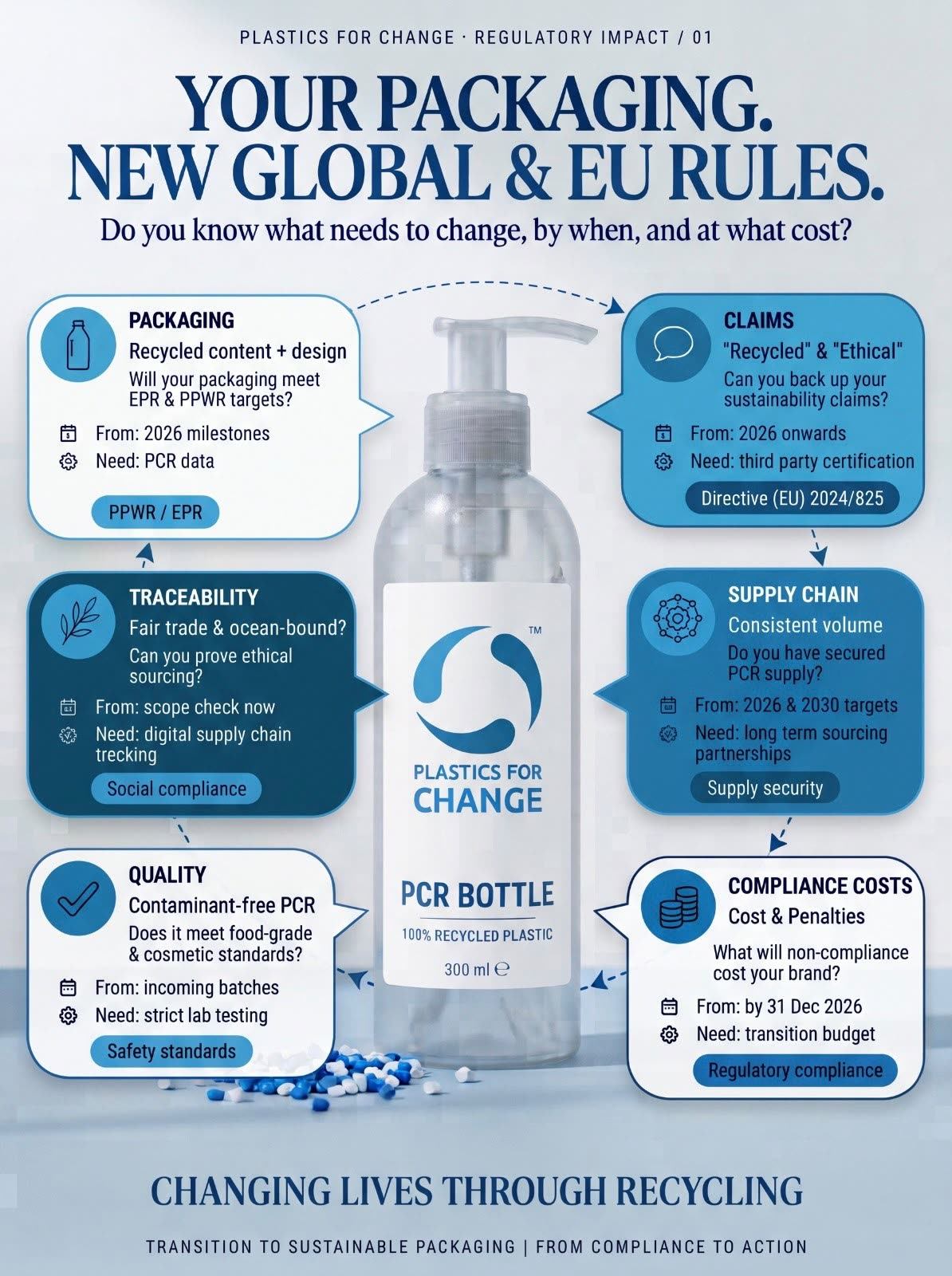
Here is an operational breakdown of the six core regulatory areas, what is changing, and the specific steps your procurement, packaging, and marketing teams need to take.
(Source Credits: Plastics For Change)
1. Packaging: Mandatory Recycled Content Targets
What is changing:
The EU PPWR mandates minimum levels of Post-Consumer Recycled (PCR) material across all plastic packaging formats by 2030. For contact-sensitive PET packaging (common in liquid soaps, toners, and shampoos), the target is 30% recycled content. Non-PET equivalents must meet a minimum of 10% recycled plastic.
What to do:
Audit current resin types across all stock keeping units (SKUs).
Initiate compatibility and barrier testing for 30% to 100% PCR content now, as retooling molds and testing shelf life can take up to 18 months.
Request technical data sheets from your suppliers verifying the exact percentage and origin of post-consumer resin.
2. Claims: Verifiable Substantiation Under Directive (EU) 2024/825
What is changing:
Broad, generic marketing terms like "eco-friendly," "green," "conscious," and "sustainable" are legally restricted. Under updated EU consumer protection rules, any environmental claim made on-pack or in marketing must be supported by recognized third-party certification or verified performance data. Calling packaging "recycled" without traceable proof invites regulatory action and consumer protection fines.
What to do:
Review all on-pack copy, primary cartons, and digital product pages to remove unsubstantiated green claims.
Replace generic claims with precise, verifiable statements (e.g., "Bottle made from 100% certified Post-Consumer Recycled plastic, excluding pump").
Collect chain-of-custody certificates for every resin supplier you reference publicly.
3. Supply Chain: Securing Consistent PCR Volume
What is changing:
As compliance milestones approach, thousands of international consumer brands are competing for the same limited supply of high-grade, clear PCR resin. Spot-market availability is tightening, and prices fluctuate heavily during peak procurement cycles.
What to do:
Move away from transactional spot-purchasing for recycled plastics.
Establish multi-year off-take agreements with recycling partners to secure fixed volumes.
Diversify resin sources to include reliable ocean-bound and community-collected collection infrastructure.
4. Compliance Costs: EPR Fees and Non-Compliance Penalties
What is changing:
Extended Producer Responsibility (EPR) programs in the EU use eco-modulation fee structures. Brands using virgin, single-use, or unrecyclable packaging pay significantly higher per-ton fees to municipal waste systems. Failure to comply with PPWR thresholds also brings customs border blocks, administrative fines, and product recall liabilities.
What to do:
Calculate the net cost difference between paying elevated EPR penalty fees versus investing in verified PCR packaging.
Design every bottle component (closure, label, adhesive, and bottle) for mechanical recyclability to qualify for the lowest possible EPR fee tiers.
Allocate capital toward early package redesigns to prevent rushed, expensive compliance retrofits later.
5. Quality: Cosmetic-Safe and Contaminant-Free PCR
What is changing:
Recycled plastics used in cosmetic containers must meet strict safety guidelines. Unprocessed or poorly sorted PCR often contains trace volatile organic compounds (VOCs), heavy metals, or chemical residues that compromise product formulas or breach cosmetic safety directives.
What to do:
Establish strict acceptance thresholds for color consistency, odor, and mechanical durability.
Require batch-level migration testing and heavy metal screening from your plastic supplier.
Partner with recyclers using food-grade washing, decontamination, and sorting technologies.
6. Traceability: Social Compliance and Verified Origins
What is changing:
Regulators and corporate governance bodies require end-to-end supply chain transparency. Sourcing recycled material from opaque broker networks leaves brands exposed to risks involving labor violations and inaccurate recycled content claims.
What to do:
Transition to suppliers that use digital tracking to log material flow from collection to final pellet production.
Source through certified channels such as the World Fair Trade Organization (WFTO) to guarantee fair pay, safe conditions, and formal recognition for frontline waste-pickers.
Maintain an accessible digital audit trail for supply chain checks.
Move from Regulatory Risk to Verified Impact
Complying with new packaging laws protects your business from legal exposure and costly redesigns. By integrating ethically collected, fully traceable PCR plastic, cosmetic brands can satisfy global regulations while supporting coastal cleanup efforts and fair wages for waste collection communities.
Ready to prepare your packaging lines? Contact our team to review resin technical sheets, request sample cosmetic bottles, and secure your certified PCR supply.