Where Does Recycled Plastic Actually Go? A Buyer's Guide to rPET, rHDPE and rPP
(Source Credits: Plastics For Change)
When companies talk about recycled plastic, the conversation often starts with how much is being recycled. For procurement teams, the more relevant question is where that material actually goes.
A PET bottle can become another bottle, polyester fibre or packaging, while rHDPE and rPP can be used across containers, pipes, automotive, household and industrial applications. Where recycled plastic ends up depends on its quality, how effectively it is sorted and the requirements of the final application. With 353 million tonnes of plastic waste generated globally in 2019 and only 9% ultimately recycled, according to the OECD, the challenge is not simply recycling more, but producing consistent recycled materials that can return to manufacturing and replace virgin plastic wherever possible.
What happens to plastic after collection?
The journey from discarded plastic to recycled raw material involves collection, sorting, washing, processing and quality control. Sorting is particularly important because mixed streams can contain different polymers, colours, labels and other contaminants. Separating these materials creates cleaner, more consistent feedstock and helps determine what the recycled material can ultimately become.
The OECD notes that polymer type, product shape, additives and attached materials all influence recyclability, with almost 40% of plastic collected for recycling in 2019 ultimately lost during the recycling process.
For manufacturers, recycled plastic is therefore more than a sustainability input. It is a raw material that must meet specific technical requirements for its intended application. The key question is: what can this material reliably become?
rPET: From bottles to textiles, packaging and new bottles
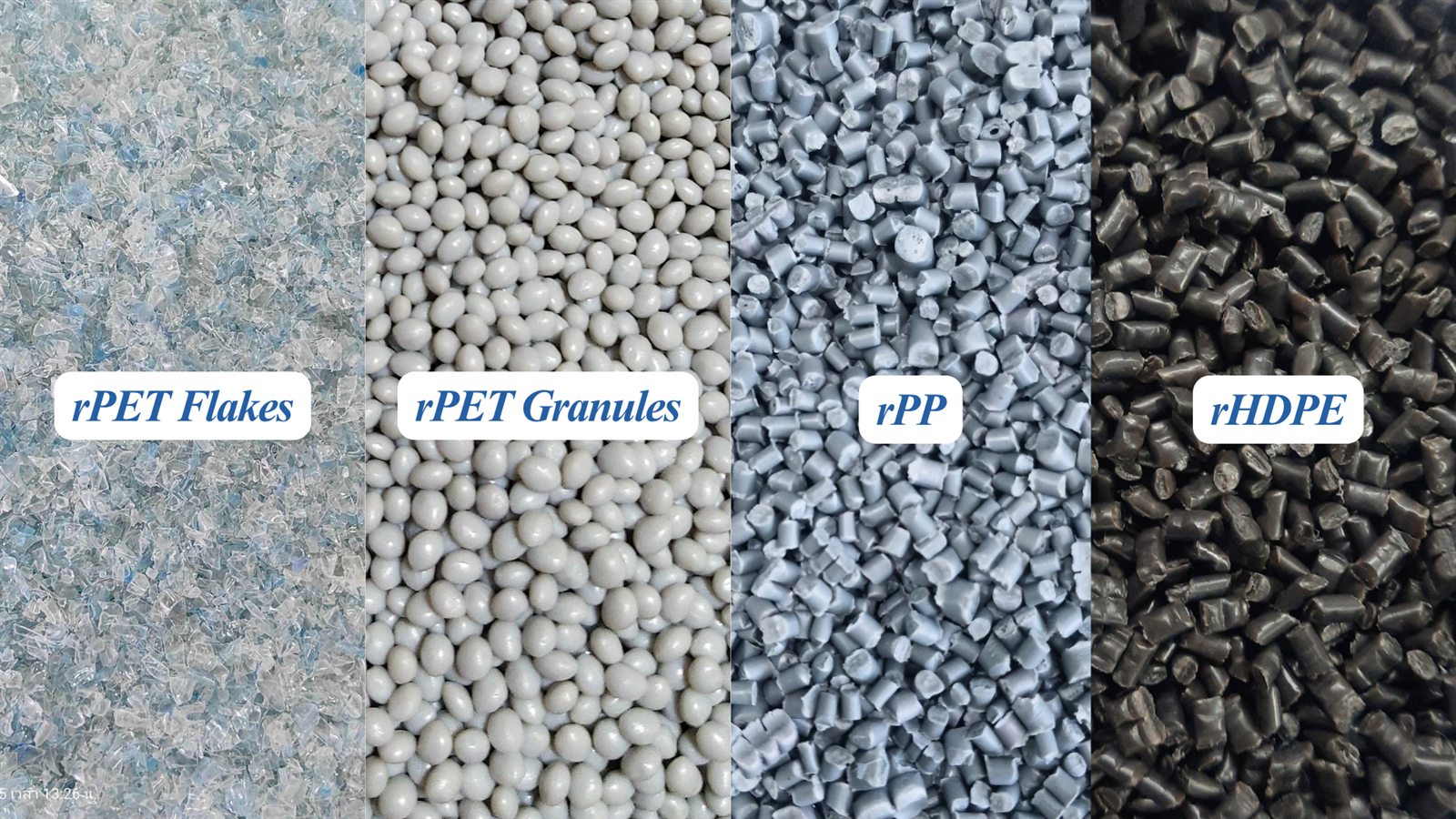
Polyethylene terephthalate, or PET, is widely used in beverage bottles and packaging. Once collected and properly sorted, it can be washed and processed into flakes, granules, fibres and other recycled forms.
rPET can also be used in sheets, trays, strapping, automotive components and other applications. NITI Aayog identifies apparel, carpets, food and beverage containers, film, strapping and industrial products among its potential end uses.
The application depends on the quality and specification of the recycled material. For buyers, rPET is not one uniform material. The right grade depends on what you are manufacturing.
rHDPE: Keeping a durable polymer in circulation
High-density polyethylene, or HDPE, is widely used in rigid packaging, containers and durable products. Once collected and sorted, recycled HDPE can be processed for new packaging, household, industrial and other rigid applications.
The right application depends on the material's specifications, including melt flow, density, colour, contamination and batch consistency. This makes effective sorting and quality control essential.
The goal is to turn recovered HDPE into a consistent recycled raw material that manufacturers can use with confidence.
rPP: Why sorting becomes even more important
Polypropylene, or PP, is widely used in packaging, caps and closures, household products, automotive components and industrial applications. Because PP waste can vary by colour and product type, effective sorting is essential before processing. Studies note that PP is commonly separated into coloured, mixed colour, white and transparent streams.
Better segregation helps produce a more consistent recycled grade suited to specific applications. For procurement teams, the key is not simply whether PP is recycled, but whether the recycled grade meets the requirements of the final product.
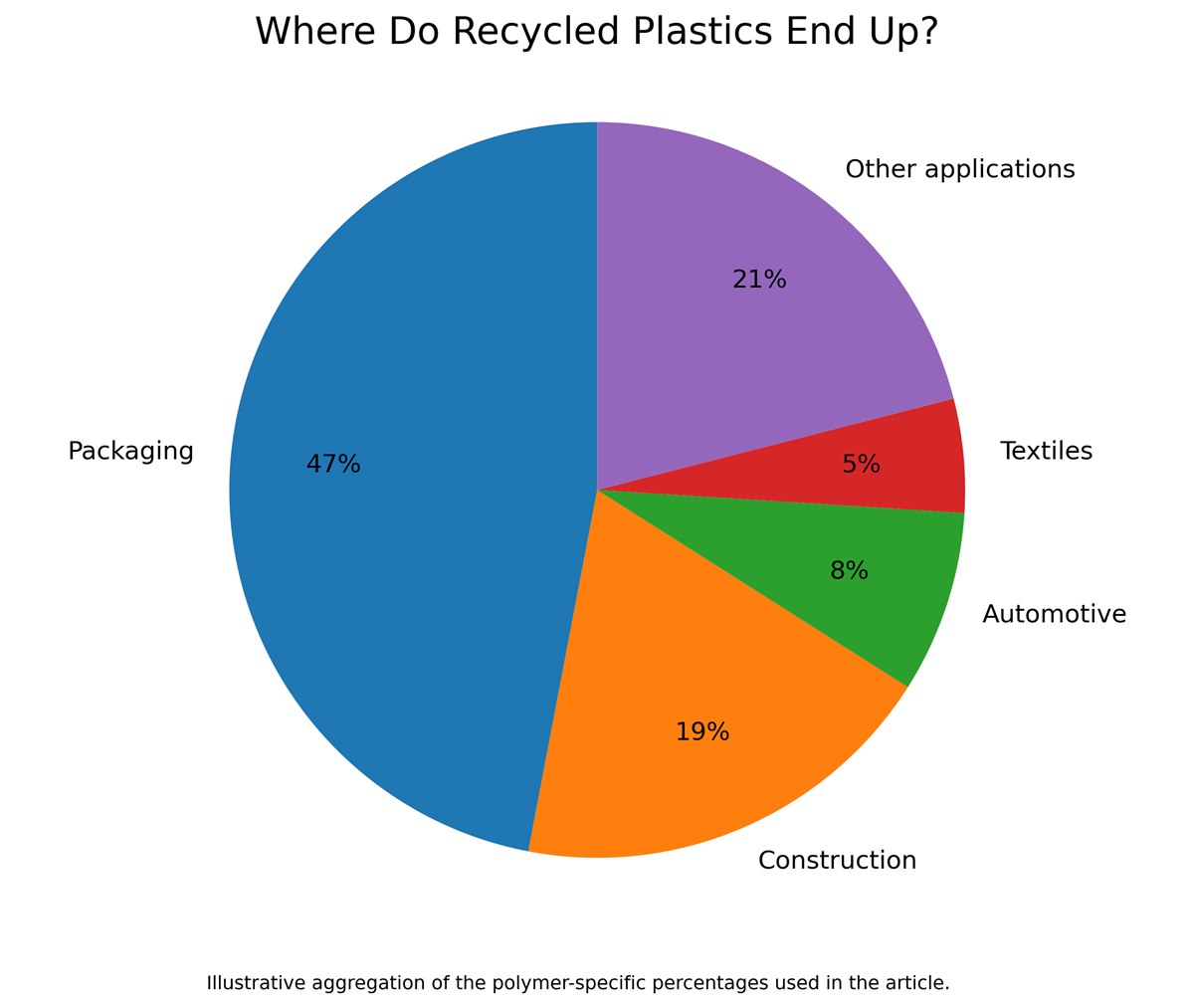
Where does recycled plastic actually end up?
(Source Credits: OECD Report)
Looking at end applications gives buyers a clearer picture of where recycled materials are being used. rPET goes into bottles, packaging and textiles, while rHDPE is used in rigid packaging, containers and industrial products, and rPP finds applications in packaging, automotive and household products.
The exact mix varies by market, polymer and material grade, but the key question for procurement teams is simple: what should they actually look for?
When evaluating recycled plastic, procurement teams should look beyond the recycled content percentage. Ask:
What is the source of the material?
How is it sorted and processed?
What are the technical specifications?
How consistent are batches?
What testing and documentation are available?
What applications is the grade designed for?
How much virgin material can it realistically replace?
These questions shift the conversation from simply buying recycled content to buying a material that can actually perform.
From recycled plastic to virgin plastic replacement
The future of recycled plastics depends on creating materials that manufacturers can trust. Better collection creates more feedstock. Better sorting creates cleaner streams. Better processing and quality control create more consistent recycled materials. And consistent materials create more opportunities to replace virgin plastic.
That is the opportunity Plastics For Change is working towards: connecting waste collection with global demand for high-quality recycled raw materials while building traceability and quality into the supply chain.
The goal is not simply to give plastic another life. It is to create recycled materials that can perform in the next one.
Looking to source recycled PET, HDPE or PP?
Explore the Plastics For Change recycled raw material portfolio or speak with our team about your material, volume and application requirements.